
Lawn Problems
Shade
Lawn grasses love the sun
and need it to thrive.
Grass growing in the shade does not get enough sunlight for vigorous growth. The lawn will be thin, often lighter in color and more vulnerable to disease.
Tree roots also compete with grass for water and nutrients. During dry weather, you can sometimes see this when the grass under trees appears brown and drier than the rest of the lawn. Some trees also give off hormones that kill any plants growing in their root zone.
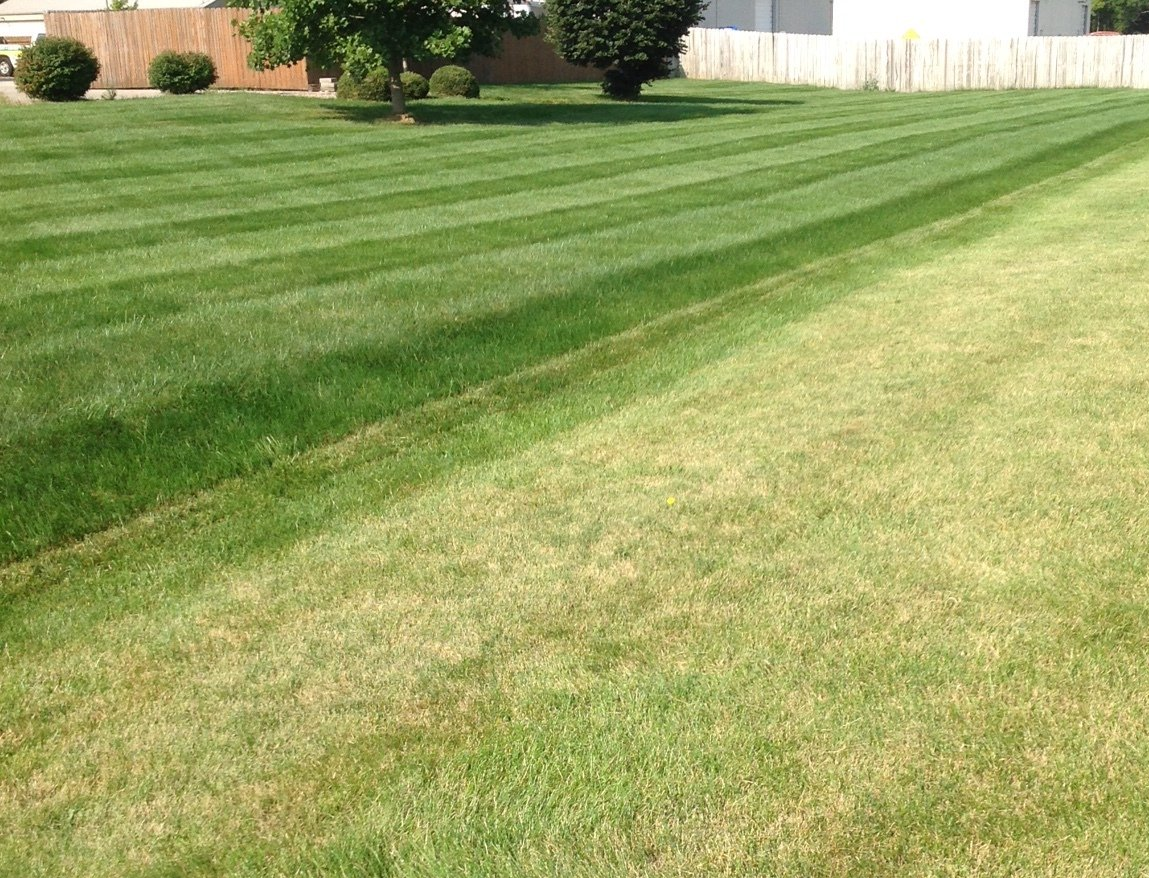
It is difficult to have a nice thick lawn in a shady area. However, there are some things you can do to improve the situation.
- Be sure the lawn gets fed well in spring and fall when there are no leaves on the trees. More sunlight can reach the grass plants, so they can manufacture food and since tree roots are less active there will be less competition for nutrients too.
- Overseed as needed in the fall with shade-tolerant grasses.
- Thin the tree branches if possible to let in more light.
- If the shade is very dense the best solution is to mulch under the trees or plant a shade-tolerant ground cover like English Ivy.
Weeds
Broad Leaf Weeds
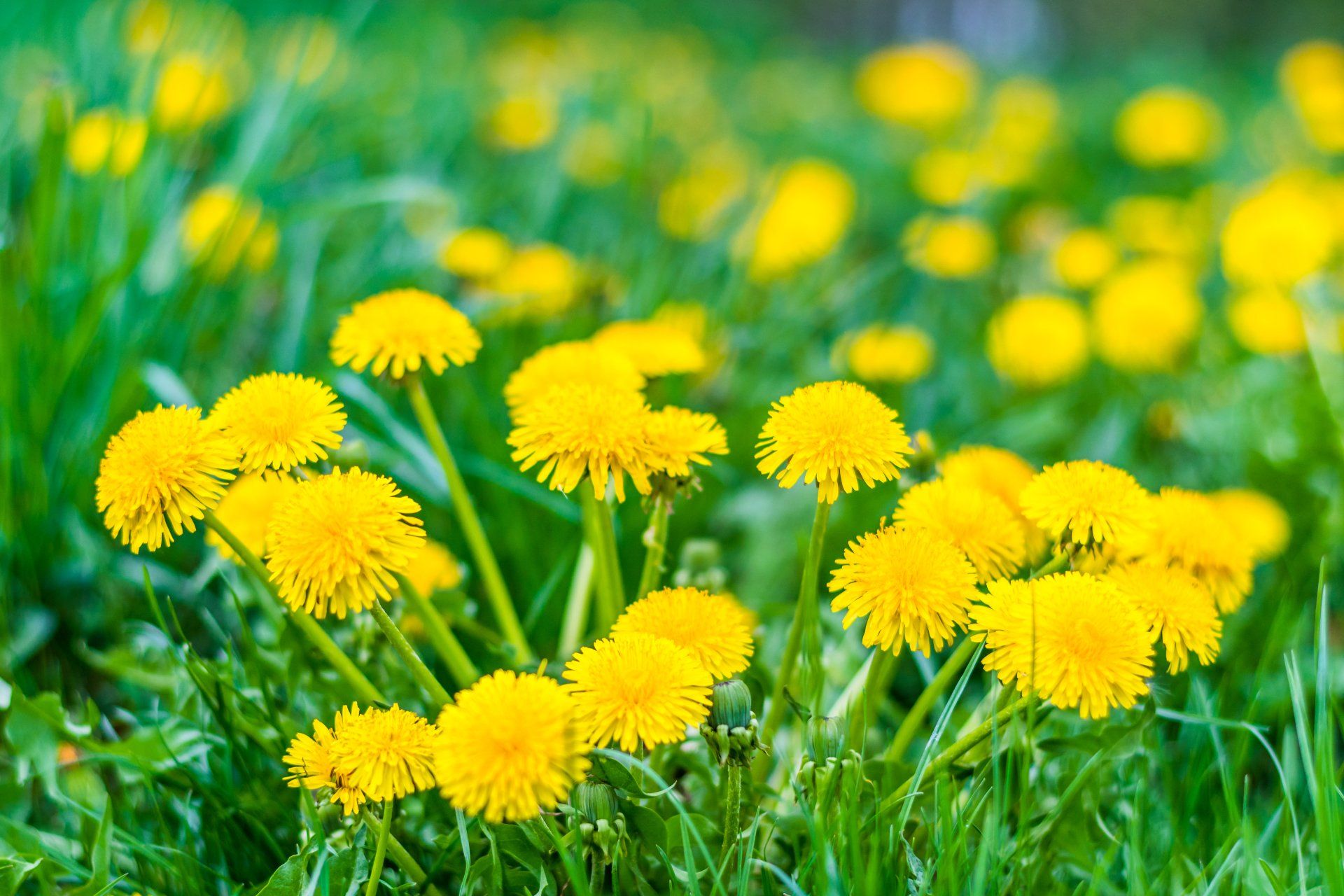
Dandelions and plantain
are in this group. They do not die over the winter. They survive from year to year and will eventually choke out grass. These are controlled best with a liquid weed control when the weeds are actively growing. When weed growth rate slows down during hot weather or dry periods the rate of control slows down too because it is tied to plant growth processes. Some weeds like violets are difficult to control and make take several treatments.
Weeds keep returning because weed seeds can remain dormant in the soil for 50 years or more! They just wait until growing conditions are right and then they germinate. Weed control is an ongoing process. A thick healthy lawn makes it hard for weeds to find room to grow.
If you have a weed problem between scheduled applications, there is no charge for a service call to take care of them.
Weedy Grasses
Plants like crabgrass and coarse fescue
have growth processes like the good grasses in lawn and it is not possible to make a blanket application of weed control which will select only undesirable grassy weeds. To control them one must either kill off the entire area and reseed or spot spray each weed clump and reseed.
Leisure Lawn
can help you plan a strategy to remove problem grassy weeds
in the lawn.
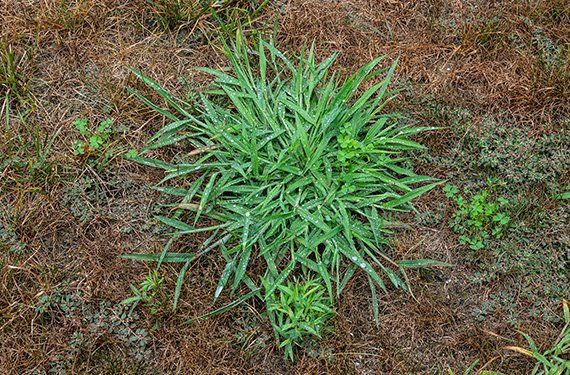
Crabgrass
Crabgrass grows from seed each spring when the soil warms and dies off with the first frost. The best way to control it is with the use of granular pre-emergent control which is watered into the soil. Things you can do to help this material perform at its best:
Raise your lawn mower height to 3 inches. This helps to shade the soil and keep it cool, so crabgrass has a harder time getting started.
Remove no more than 1/3 of the blade length at one time. Cutting off more puts the plants into shock. This gives the crabgrass and other weeds time to get started with little competition. If grass gets very tall between mowing, you may need to mow it more than once (several days in between) to get back to normal height.
Maintain a regular fertilization schedule. This will keep your lawn as healthy and thick as possible, so it can choke out weeds.
Don't break the pre-emergent barrier. Avoid vigorous raking or edging which will break the soil barrier.
Water during dry periods. This prevents the soil from cracking and breaking the pre-emergent barrier. It will also keep your grass actively growing and better able to compete with crabgrass.
Many factors are involved in preventing crabgrass. We provide an effective pre-emergent and along with proper watering and mowing practices, we will accomplish the best results.
Soil Compaction
Compaction occurs when soil particles get squashed together from gravity, foot or other traffic and even rain. The result is soil which is often as hard as a brick.
Problems Caused by Compaction:
- Fewer and smaller pore spaces for root growth, water, and air penetration.
- Waterlogged areas because water can't drain through
- Soil that warms very slowly in the spring and overheats in the summer due to lack of insulating air spaces.
- Plants have a smaller area from which to draw nutrients because roots are not able to expand through hard soil.
- Roots mature and die faster.
- Lawns thin and growth slows down.
- Plants have lower food reserves and are more vulnerable to wear and disease.
The easiest solution to these problems is to core aerate the lawn on a regular basis. Home lawns do well with one aeration yearly in the spring or fall. Core aeration is done by a machine that pulls up many small plugs of soil about 3 inches long. These are left on top of the lawn to break down and provide a top dressing. The holes allow air, water, and nutrients to penetrate and give the grassroots a place to grow.
Surface Insects
Surface feeding insects include chinch bugs, billbugs, and sod webworms. They feed on the parts of the grass plant which are above the soil. There are two ways to control lawn damaging surface insects. One is prevention and the other is a treatment when damage occurs.
Preventative treatment is applied before insects become active. It will keep the damaging insect population down without harming the beneficial earthworms or other microorganisms. (It will also control fleas which may be present.)
We will notify you if we notice any insect activity in your lawn and you can decide how you want to address the problem.
Grubs
Grubs are the larval stage of several kinds of beetles and can do a lot of damage to a lawn or garden. They hatch from eggs laid in the ground early in the summer and live in the soil where they gorge themselves on the roots of plants.
We don't know that they are present until some damage is noticed. What you will see is wilting plants or sections of turf which can be picked up like a carpet. In some cases, areas of grass will be killed from heavy grub feeding.
If grubs are not controlled when they are first noticed, they will continue feeding until fall temperatures drive them deep into the soil for the winter. They will resurface and continue feeding in the spring until they emerge from the soil as adult beetles. These beetles lay eggs in the early summer and the whole cycle begins again.
We can't predict where the beetles will lay their eggs, but we do know to start looking for signs of feeding in late July and continue to be watchful well into the fall.
Please be alert for wilted areas or brown spots as you mow. Please call us 260-338-1893
if you suspect grub activity on your lawn. We do have materials that will control grubs effectively.
Lawn Disease Control
Leisure Lawn
can diagnose and provide treatment for lawn diseases. Some symptoms of the disease include brown or straw-colored patches, discolored spots on the grass blades, black stripes on the grass blades, wilting, and pink colored thread-like strings on the lawn.
How to Minimize Lawn Diseases:
- Plant disease-resistant varieties of grass.
- Fertilize the lawn regularly to keep plants healthy.
- Fertilize with slow-release plant foods that do not stimulate fast succulent growth.
- Aerate regularly to create a healthy environment for the plants.
- Mow the grass at the correct height to reduce stress.
- Ensure the plants are not wet for long periods of time.